
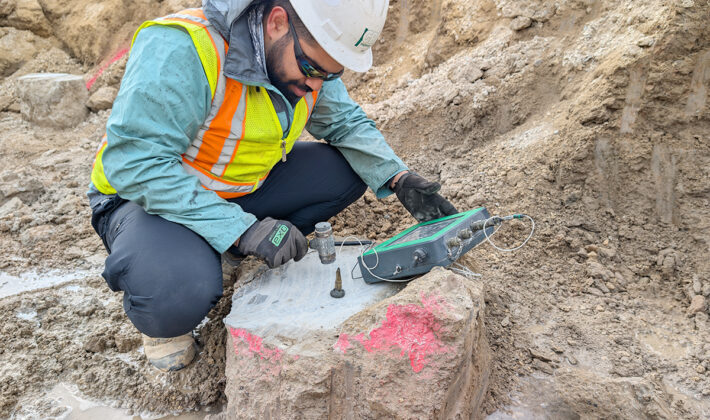
In the realm of modern construction, ensuring the integrity and safety of foundations is paramount. Among the various methods used to assess the condition of piles, the Low Strain Pile Integrity Test (PIT) has emerged as an efficient and effective approach. This non-destructive testing method provides valuable insights into the structural stability of piles, ensuring that construction projects not only meet safety standards but also achieve optimal efficiency. By leveraging advancements in technology and methodology, the Low Strain PIT enhances the overall quality and reliability of construction processes.
Understanding Low Strain Pile Integrity Tests
The Low Strain Pile Integrity Test is a non-invasive technique used to evaluate the condition of concrete piles. This method involves generating low-strain stress waves using a small hammer or similar device at the pile head. The response of the pile to these stress waves is recorded and analyzed to detect potential defects or anomalies.
Key Benefits of Low Strain PIT
- Non-destructive: As a non-invasive method, it preserves the integrity of the pile while providing comprehensive data.
- Cost-effective: Lower costs associated with testing compared to other invasive methods.
- Quick results: Rapid analysis allows for timely decision-making.
- Versatile application: Suitable for a wide range of pile types and materials.
Applications in Modern Construction
Low Strain PIT is utilized in various phases of construction, from initial assessments to ongoing maintenance checks. Here are some key applications:
- Initial quality assurance: Verifying the integrity of newly installed piles before progressing with construction.
- Routine inspections: Regular evaluations to ensure continued structural reliability.
- Post-event assessments: Evaluating the impact of environmental events or accidents on pile integrity.
For more detailed insights into these applications, explore advanced guides and tips.
Maximizing Efficiency with Low Strain PIT
To fully leverage the benefits of Low Strain PIT, it is crucial to implement best practices and utilize cutting-edge technology. Here are strategies for maximizing efficiency:
Integrating Technology
Advancements in digital technology have significantly enhanced the capabilities of Low Strain PIT. The use of sophisticated software allows for:
- Accurate data analysis: Advanced algorithms for precise interpretation of test results.
- Remote monitoring: Real-time data transmission for immediate analysis and decision-making.
- Comprehensive reporting: Detailed reports that facilitate informed decision-making processes.
Learn about our tailored solutions that incorporate these technological advancements.
Training and Expertise
Utilizing Low Strain PIT effectively requires skilled professionals who understand the nuances of the technique:
- Specialized training: Ensuring that personnel are well-versed in the latest methodologies and technologies.
- Continuous education: Keeping abreast of new developments and advancements in the field.
- Expert analysis: Interpreting data accurately to provide reliable assessments.
For expert strategies on training and expertise, discover expert strategies here.
Conclusion
Low Strain Pile Integrity Tests represent a pivotal advancement in the field of construction engineering. By focusing on non-destructive methodologies, integrating modern technology, and emphasizing expertise, this approach ensures that construction projects are both safe and efficient. To find out more about this approach, consider exploring comprehensive resources and guides that delve deeper into the applications and advantages of Low Strain PIT.