
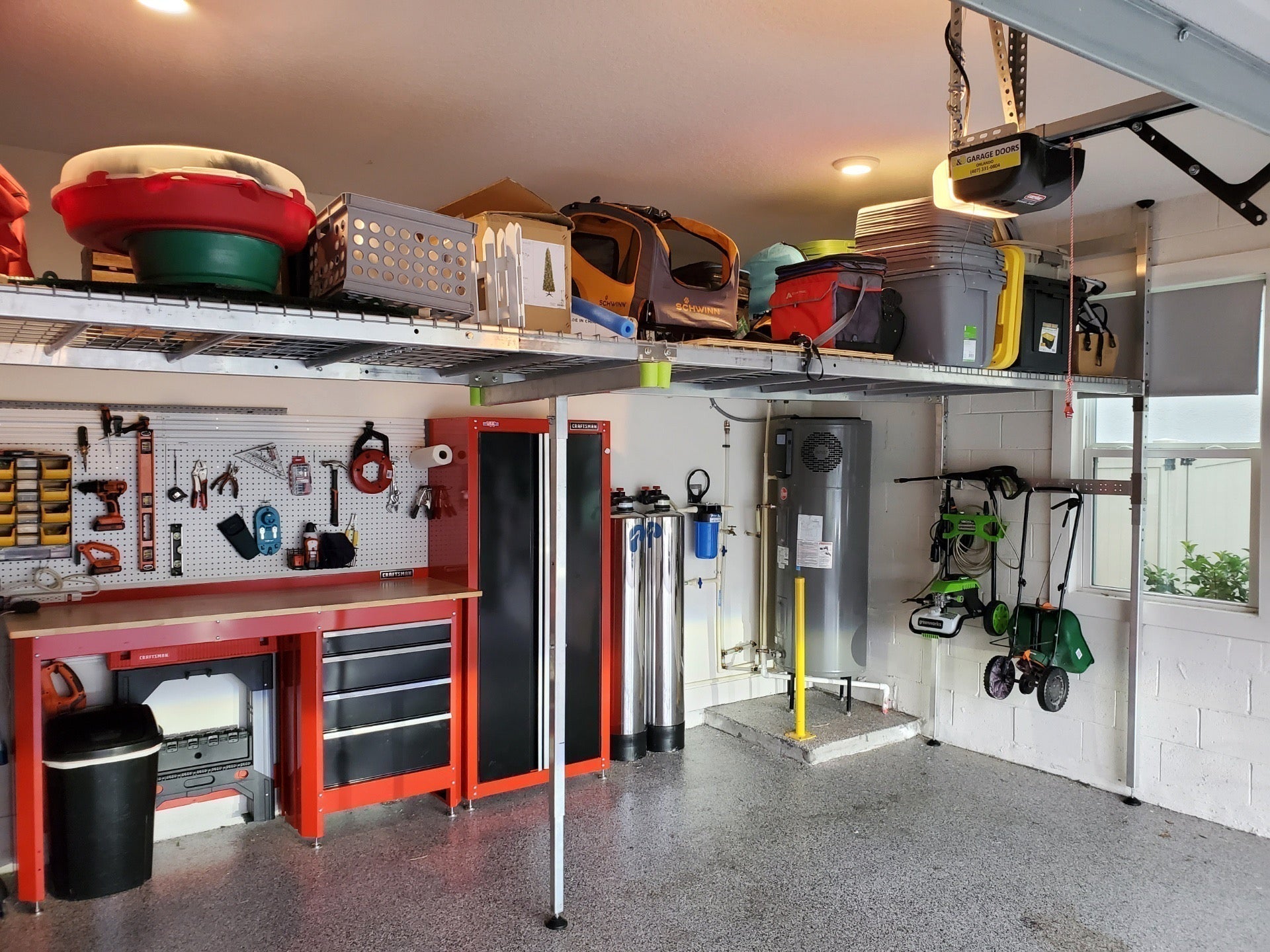
Cluttered garages are a common source of frustration for homeowners, often turning a valuable storage area into a chaotic space. Overhead storage systems offer a practical solution by utilizing the unused vertical space, freeing up floor area for vehicles, workstations, and daily activities. By installing sturdy racks and shelves above head height, families can keep seasonal items, tools, and recreational gear neatly organized while maintaining easy access. This approach not only enhances the visual appeal of the garage but also contributes to overall home organization and safety.
Why Overhead Storage Is a Game-Changer
Traditional garage layouts rely heavily on floor space, which quickly becomes saturated with boxes, sports equipment, and bulky items. Overhead storage changes that dynamic in several key ways:
- Maximizes vertical space: Utilizes the often-ignored ceiling area, creating additional square footage without structural changes.
- Improves safety: Reduces tripping hazards by keeping items off the ground and away from walkways.
- Enhances accessibility: Items stored at a convenient height are easier to retrieve than those stacked in deep piles.
- Boosts property value: A well-organized garage is an attractive feature for potential buyers.
Key Benefits for Home Organization
1. Clear Floor Space for Multi-Purpose Use
When the floor is free from clutter, the garage can serve multiple functions, workshop, gym, or even a play area for children. Overhead racks hold infrequently used items such as holiday decorations, camping gear, and bulk supplies, leaving the ground level open for daily tasks.
2. Streamlined Seasonal Storage
Seasonal items often occupy valuable space for months at a time. By allocating overhead sections for summer or winter gear, homeowners can rotate supplies efficiently. This method reduces the time spent searching for items and eliminates the need for duplicate storage containers.
3. Protection From Damage and Moisture
Elevating belongings off the concrete floor protects them from moisture, dust, and accidental spills. Metal tools, wooden furniture pieces, and electronic equipment benefit from the added airflow and reduced exposure to ground-level contaminants.
Design Considerations for Effective Overhead Systems
Choosing the right overhead storage solution involves evaluating the garage’s dimensions, load capacity, and intended use. The following factors should guide the selection process:
- Weight rating: Ensure the rack’s load capacity matches the weight of stored items.
- Adjustable height: Systems with adjustable beams allow customization for different ceiling heights.
- Material durability: Steel or heavy-gauge aluminum provides long-term strength and resistance to rust.
- Ease of installation: Prefabricated kits with clear instructions simplify the mounting process.
For a comprehensive overview of specifications and installation tips, Discover expert strategies here.
Practical Tips for Organizing Overhead Storage
Even the best rack system can become ineffective without proper organization. Implement these best practices to keep the overhead area tidy and functional:
- Group similar items: Store all gardening tools together, sports equipment in another section, and seasonal décor in a third.
- Label containers: Use clear, weather-resistant labels on bins to identify contents at a glance.
- Use uniform bin sizes: Consistent dimensions maximize space efficiency and create a clean visual line.
- Leave breathing room: Avoid overloading shelves; maintain a small gap between items for airflow.
Additional guidance on labeling and bin selection can be found by Learn about our tailored solutions.
Integrating Overhead Storage With Existing Garage Layouts
Many homeowners worry that adding overhead racks will interfere with existing fixtures such as garage doors, windows, or lighting. Proper planning ensures seamless integration:
- Measure clearance: Verify the distance between the rack and the garage door’s highest point to prevent obstruction.
- Consider lighting: Position racks so they do not cast shadows over work areas; LED strip lighting can be added beneath the beams.
- Maintain access to utilities: Keep pathways clear for electrical panels, HVAC vents, and water lines.
For detailed layout diagrams and spacing recommendations, Explore advanced guides and tips.
Long-Term Maintenance and Safety
Regular upkeep extends the lifespan of overhead storage systems and preserves safety standards. Follow these simple maintenance routines:
- Inspect brackets and bolts quarterly for signs of wear or loosening.
- Clean dust and debris from shelves to prevent buildup.
- Re-evaluate load distribution annually, especially after acquiring new equipment.
Staying proactive with maintenance ensures that the garage remains organized and hazard-free for years to come.
Conclusion
Implementing garage overhead storage transforms a cluttered, underutilized space into a streamlined, multifunctional area that supports the entire household’s needs. By maximizing vertical space, protecting items from damage, and providing clear organization strategies, homeowners gain both practical benefits and an enhanced aesthetic. With thoughtful design, proper installation, and routine maintenance, overhead storage becomes a cornerstone of effective home organization, adding value and peace of mind to any property.